

Why We Learn: A Message to New Students
- Share
- Tweet
- Send to email
Address at the Entrance Ceremony
Academic Year 2026
April 4, 2026
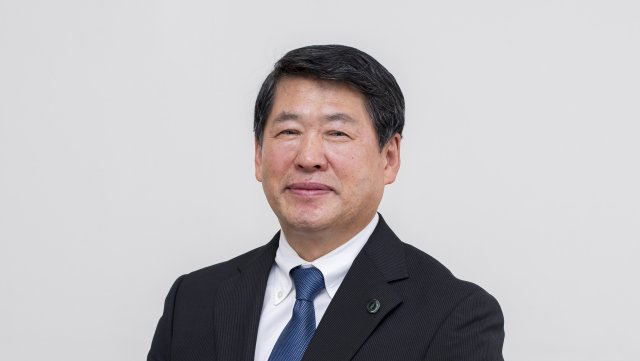
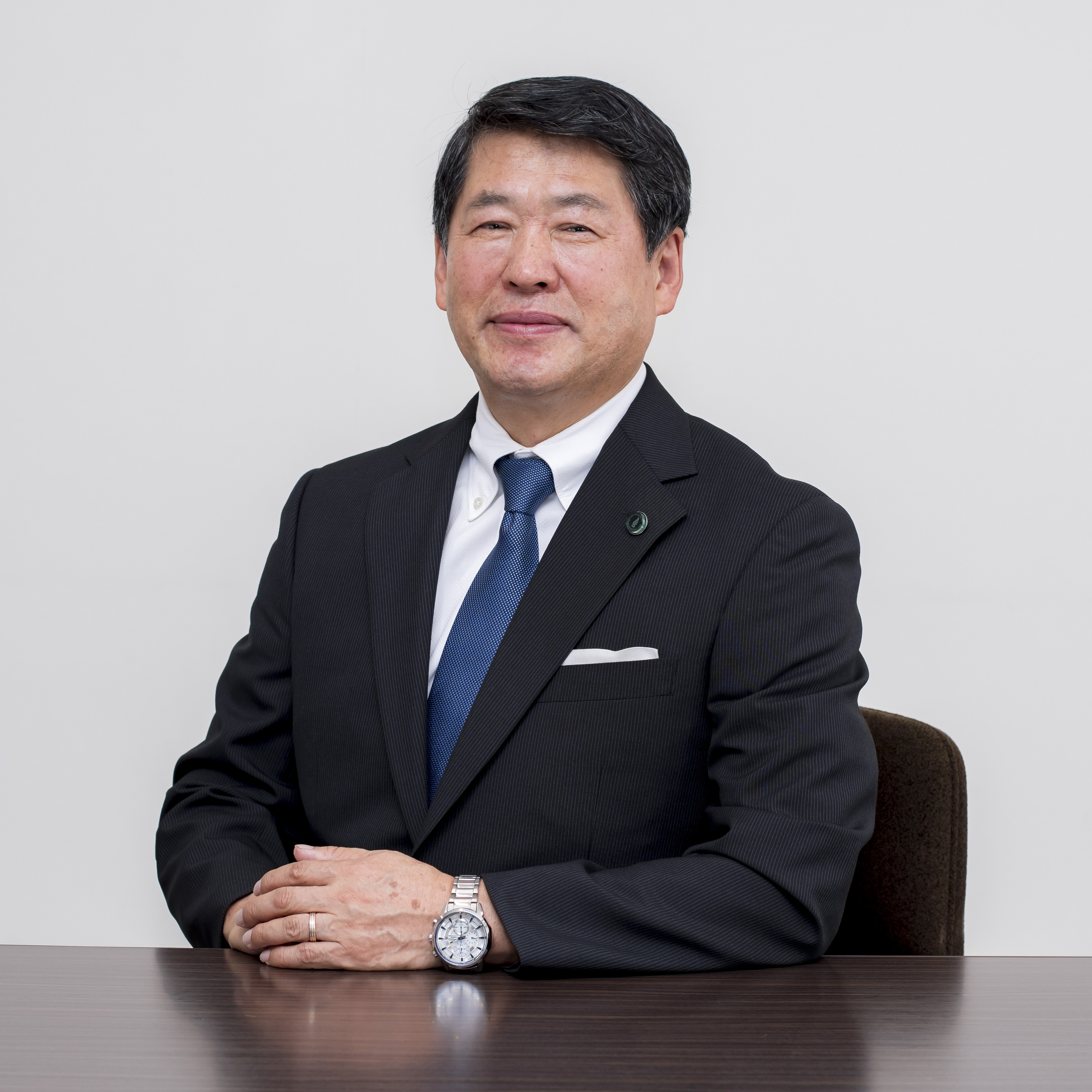
Soichiro Nakamura
President, Shinshu University
Dear new students, congratulations on your admission. On behalf of Shinshu University, I extend my heartfelt welcome to all of you. I would also like to offer my sincere congratulations to your families and all those who have supported you up to this day.
On this memorable occasion, I would like to pose to you one profoundly important “question”—one that will become the starting point of your learning and your life.
What is a university for?
Why have you chosen to enter a university?
What do you hope to learn here?
What do you expect from your university experience?
We now live in an age in which generative AI can instantly provide what appears to be the “optimal answer.” No matter what “question” we ask, answers are returned almost immediately. Vast amounts of information are organized, and possible “optimal solutions” are presented. If we look only at the act of obtaining answers, it may be said that there has never been a more convenient time in human history.
However, we must pause here and reflect calmly.
What generative AI provides are merely answers to “questions” that were given in advance. Identifying what should be asked, and giving meaning to those “questions,” is the role of human beings. Throughout history, new knowledge and discoveries have always arisen from such “questions.” Yet, perhaps without realizing it, we may be gradually losing the ability to formulate “questions” and to think them through deeply. In such a world, what is the significance of a university? Is a university truly necessary? I believe that precisely because we live in such an age, the role of universities becomes all the more important.
A university is not simply a place to receive answers. It is a place to cultivate the ability to generate “questions.”
To explore your questions more deeply.
To doubt.
To think things through.
From this process, new “knowledge” is born.
A university is, therefore, a place where the human mind is trained so that we may continue to think, inquire, and act as human beings.
Allow me to offer you another important “question.”
Why do we learn?
We learn in order to shape the future through the “questions” we ask ourselves.
The future is not predetermined, nor is it something given by someone else. Each of your “questions” will shape the future. At the root of every question lies curiosity. Those who continue to ask questions are the ones who create the future. This is the essence of learning at a university.
Let me now speak about the foundation of learning that Shinshu University values deeply: the liberal arts. The origins of the liberal arts trace back to ancient Greece and Rome, and they were later systematized in medieval European universities as the Seven Liberal Arts. Grammar, rhetoric, and logic trained the mind through language, while arithmetic, geometry, astronomy, and music helped people understand the order of the world. These disciplines formed the foundation for cultivating the capacity for free thought. The liberal arts foster the ability to understand the world, reflect on society, and formulate one’s own “questions.”
In the Central Plaza of the Matsumoto Campus, the following words are engraved:
“The truth will set you free.”
To pursue truth is an act that leads to freedom. Freedom does not mean acting as one pleases. It means understanding things deeply, making one’s own judgments, and choosing responsible actions. The liberal arts support such freedom. Continue to cultivate the ability to ask questions. These “questions” will eventually give rise to new “knowledge” and transform the very structure of society itself.
In order to connect the “knowledge” born from such “questions” to the future of society, Shinshu University has been advancing new initiatives. As a result, in 2023, the university was selected as one of the first institutions under the J-PEAKS program, a national initiative to strengthen distinctive, regionally rooted research universities. In March 2024, we established the Institute for Aqua Regeneration (ARG). Centered on water and energy, the ARG brings together knowledge across disciplinary boundaries and advances education and research aimed at realizing an Earth-positive future—the regeneration of our planetary environment.
The challenges facing the world today are extraordinarily complex. Climate change, energy issues, resource constraints, demographic change, and the sustainability of local communities—none of these can be solved by a single academic discipline. To achieve an Earth-positive future, we must mobilize all fields of science. While modern scholarship has achieved remarkable progress through specialization, “knowledge” has also become fragmented and confined within disciplinary boundaries. What is now required is the reconnection of knowledge across those boundaries. This means discovering relationships among what has been separated, assigning new meaning, and creating new value for society. By linking the natural sciences, humanities, and social sciences, we must reconsider problems from new perspectives and create solutions together with society.
From this awareness has emerged at Shinshu University a new concept: a trans-interdisciplinary study. This is not merely interdisciplinary or a simple fusion of fields. It is a framework that reconnects science and the arts beyond conventional boundaries, and a future-oriented approach to creating new “knowledge” together with society.
To ask “questions,” to connect “knowledge,” and to create new value—I am convinced that trans-interdisciplinary study is a guiding path that will open the future. This very process is what constitutes Shinshu University’s social responsibility—what we call University Social Responsibility (USR).
The true bearers of this responsibility are each and every one of you.
Beyond the boundaries of disciplines, you yourselves will become the central actors of this trans-interdisciplinary approach, continuing to ask questions and to create new “knowledge” through the integration of knowledge.
Shinshu is a land blessed with mountains and water.
The mountains teach us to aspire to greater heights.
Water teaches us a flexible and resilient form of knowledge that continues to flow and adapt.
Hold your aspirations high like the mountains.
Learn with flexibility like water.
Acquire knowledge to shape the future.
Begin your journey here at Shinshu University.
Finally, I would like to ask one thing of you.
Stay curious.
Those who remain curious and continue to ask questions are the ones who create the future. University learning is not about memorizing answers. It is about holding questions and continuing to think.
I sincerely look forward to the challenges you will take on.
Once again, congratulations on your admission.