
English News
2025/04/25
What it means to study and live in Sweden

Name: Yukina Tsuchiya
Special Needs Education Course (Undergraduate)
Study Abroad Period: January 2024 - January 2025
Host University: Uppsala University, Sweden
1.About Uppsala University
Uppsala University is the oldest university in the Nordic region, founded in 1477. Since it has a long history, there are plenty of student traditions, including various events. One of the biggest student traditions is the "nation"; system.There are 13 nations, each named after a Swedish city. Every day and every week, they organize events such as quiz nights and board game nights.(It depends on the nation.)Many nations also have pubs in their basements, where students can enjoy drinks and food. The burgers there are really good! Some nations also provide study spaces, and of course, you can enjoy fika at their cafés. In summary, nations are places where students can study, have fika, or drink together--it's full of joy.
Like here at Shinshu University, Uppsala University also has multiple campuses. However, they are all located within the same city. If your major is Educational Science or Psychology, you will study at Blåsenhus. If you are an Economics student, you will use Ekonomikum. Life science students go to BMC, and so on. At Ekonomikum, there is a darkroom, which is a quiet study space. It was really helpful for me when I needed to focus on my studies--really comfortable! Uppsala University also has a light room near the cathedral. This room is open during winter to help prevent seasonal depression and vitamin D deficiency. In winter, the sun sometimes shines for only four hours a day, and there are many cloudy and snowy days, making it difficult to get enough sunlight. Like these examples, there are many kinds of support available for students at Uppsala University.
2.Course Structure and Learning Experience
At Uppsala University, some courses are completed in one-month intensive sessions (50%), while others take around two months to finish (100%). When taking 50% courses, two classes run parallel to each other. I took two types of courses related to Education and Psychology. Each course consisted of two main components: lectures and seminars. The lecture format was quite similar to what I was used to--professors would explain the material, and we would learn by listening. Before both lectures and seminars, we were assigned reading materials, including journal articles and specific chapters from textbooks. During seminars, we had to give presentations and participate in discussions based on the readings, so it was essential to complete them carefully. If I had extra time, summarizing key points and forming my own opinions beforehand helped me participate more actively.
Class sizes varied depending on the course, but most had around 30 students, with some smaller classes having only 10 students. Since we were enrolled in courses designed specifically for exchange students, all classes were conducted in English, and professors also taught in English. Students came from various countries, with a particularly large number from the Netherlands, Spain, Germany, and Japan. Most exams were in the form of written reports, though some had to be handwritten due to concerns about students using AI tools. On average, reports were about 3,000 characters long, which is roughly 6-7 pages of A4 paper. Some assignments required citing literature from class to support our arguments, while others involved conducting independent research and summarizing findings. Because I didn't have a part-time job, I had plenty of time to study and have fun. I will introduce a few different daily schedules.
Days with Morning Classes
● 6:30 Wake up → Breakfast → Take the bus around 7:40, arrive at the classroom around 8:05
● 8:15 - 10:00 First class → Go home. Sometimes, I would chat with friends and have lunch together before heading back.
● In the afternoon, I was usually free. Occasionally, I had classes. When I was free, I spent time doing housework like shopping and laundry or working on assignments.
Days with Afternoon Classes
● In the morning, I would sleep in as long as I wanted or work on assignments and prepare for class. Sometimes, I did housework.
● In the afternoon, I had about two hours of class. Afterward, I would either go to Nation with friends or go straight home and work on assignments. I also cooked my own meals.
Exam Period
Since I still had regular classes, I was constantly working on assignments, assignments, assignments. I spent a lot of time reflecting on my progress.
To stay focused, I went to cafés for a change of scenery, used the university library, and made use of dark rooms to create a good study environment.
Days Off
I went shopping in far-off places, took walks with friends, went on trips, and even did volunteer work.
During summer vacation, I rode my bike to the lake, played in the water, and had BBQs. I also enjoyed seasonal events and parties with friends. At parties, we drank alcohol, shared traditional dishes from our home countries, played card games, and danced.
What I Ate
Most things were expensive (about 1.5 times the price compared to Japan), so I could not afford to be extravagant.
I usually bought frozen fish and meat, because it is much cheaper than the fresh ones. I also chose specific stores for vegetables to keep costs low.
I mainly cooked for myself. Luckily there is Japanese rice with an okey price. I often ate rice with some side dishes.
To be honest, since the kitchen was shared, there were times when I didn't want anyone asking me about my cooking. On days when my corridor mates were having parties, I would stay in my room and eat meals that did not require using the stove, such as bread with cheese, fruit, something like that.
My Favorite Thing: Fika
Like everyone who has been to Sweden, my favorite thing was definitely Fika. After class, I enjoyed chatting with friends or working on assignments together. There were many cafés in town, and the environment was great for studying, making it easy to spend time there. One of my best memories is staying at a café with friends, working hard on presentation materials together.
3.What I Gained from Studying Abroad
The first thing that comes to mind is friendships. Regardless of age or nationality, I was fortunate to meet truly great friends, and thanks to them, I was able to create countless wonderful memories. They helped me when I was struggling, invited me to events, and celebrated my birthday--allowing me to experience their kindness firsthand.
The second thing is a broader perspective. It may sound cliché, but living in a country with different cultures and social norms truly helped me grow. Spending time with people from diverse backgrounds and learning about education from new perspectives made my way of thinking more flexible and open-minded compared to before studying abroad. In daily life, I often questioned things I had taken for granted or unconsciously followed as unspoken rules. This led to new realizations and even strengthened my sense of identity.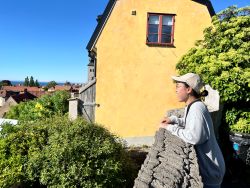
Additionally, I traveled alone a lot during my time abroad. Before going to Sweden, I had barely traveled alone within Japan before. Through this experience, I learned that I am more capable than I thought. Traveling in a country with a different language inevitably comes with unexpected challenges, but there are always kind people willing to help, and somehow, things always work out. While planning carefully is important, I also realized that sometimes, it is nice to travel spontaneously--just like stopping by a casual street stroll. Meeting new people along the way also turned out to be a lot of fun.
4.Advice for Future Study Abroad Students
Studying abroad is an incredible opportunity to reflect on yourself and truly understand who you are. You'll often find yourself asking questions like: Who am I? What do I like or dislike? What do I want to do in the future? At times, you might compare yourself to others and feel discouraged, but even through these comparisons, there are a lot of things to learn. By repeatedly trying, failing, and discovering new aspects of yourself, you'll grow in ways you never expected. I did not decide to study abroad to change myself--but rather to learn new things. However, through the process, I was shaped by my experiences, challenged by difficulties, and ultimately became more flexible.
Keeping up with classes can be tough, especially when you are surrounded by people who are eager to be there and learn. But the thing that I believe is most important is, when you look back, you feel like you gave it your all--despite the challenges, you also had fun. The friendships you build along the way will help you through the tough times, and in the end, you'll realize how precious those moments were.
The university also provides great support, so as long as you take care of yourself, make sure to put your energy into what matters to you. Travel, go to parties, have deep conversations, and enjoy the little things. Sure, there will be tough moments too, but you will have plenty of time, so take it slow and do not rush. Personally, I felt that people abroad (especially in Europe) were not as busy as in Japan, and life moved at a more relaxed pace. Maybe you can try immersing yourself in that atmosphere as well. Don't be bound by the rules or expectations you grew up with--be free and take on new challenges.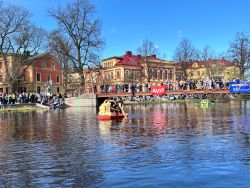
Step out of your comfort zones and try things you have never done before. Studying abroad would be a great excuse to do just that! :)
English News
- English News
-
- Category list
- Student Experience
- News
-
- Year